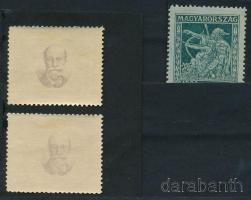
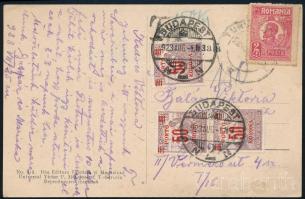
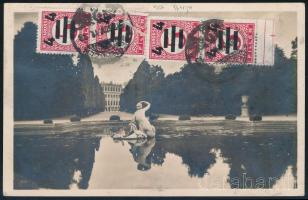
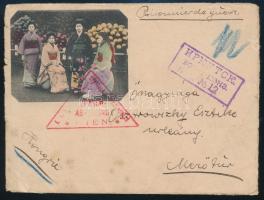
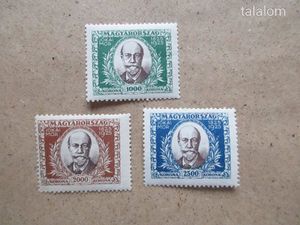
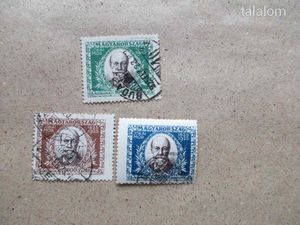
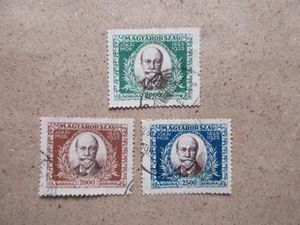
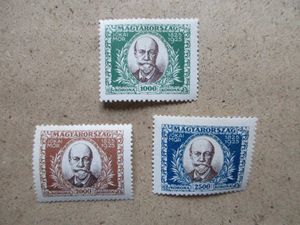
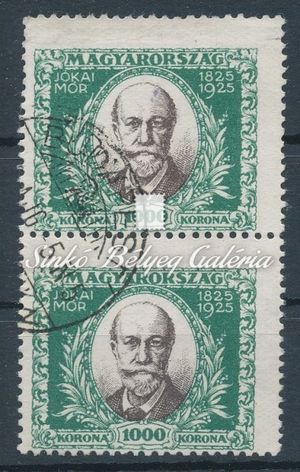
The set was issued to commemorate the centenary of the birth of Mór Jókai. Each of the three values issued in 1925 depicts the writer’s portrait within a differently coloured frame.
The stamps were designed by Ferenc Helbing. With their vivid, well-balanced colours and finely detailed portrait, they are regarded as one of the most attractive Hungarian issues of the period.
The stamps were printed by offset lithography, although the paper used had originally been intended for recess printing. This paper was not particularly well suited to the offset process and probably contributed to the numerous printing irregularities found on the issue.
On all three values, complete or partial offsets of the frame colour or portrait colour may appear on the reverse. These offsets can reproduce the frame or Jókai’s portrait clearly on the back of the stamp.
Other characteristic varieties include plate flaws and misregistration between the two printed colours. On some examples Jókai’s portrait is not precisely centred within the frame. The degree of displacement varies from minor shifts to conspicuously misregistered impressions.
A total of 500,000 sets were printed, but more than half were later destroyed. As a result, used and mounted-mint examples remain relatively common, while fresh unmounted-mint examples in perfect condition are less frequently encountered.
Known Printing Characteristics and Varieties
- Complete or partial offset of the frame colour on the reverse;
- complete or partial offset of Jókai’s portrait on the reverse;
- misregistration between the portrait and frame;
- various plate flaws and minor printing irregularities.


 MBK —
MBK —