In the autumn of 1945, amid the ruins of the Second World War, Paris hosted the first World Trade Union Congress, at which the World Federation of Trade Unions (WFTU) was founded.
The newly established organisation set itself ambitious goals: creating international trade-union unity, protecting workers’ rights worldwide, supporting peace and reconstruction, opposing colonialism, and taking a firm stand against racism.
At the time, it seemed that the foundations of a new and more just world were genuinely being laid. History, however, intervened. The ideological tensions of the Cold War soon appeared within the trade-union movement as well, and the unity of the WFTU broke down as the different political blocs pulled labour organisations in different directions.
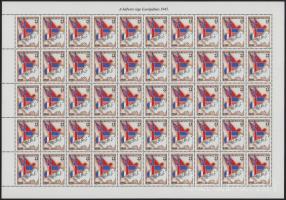
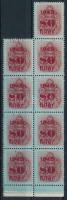
This gives particular historical significance to the fact that Hungary honoured the World Trade Union Congress with a special stamp issue as early as 1945—preserving that brief idealistic moment when it seemed that the workers of the world might truly unite.
Designer:
- György Konecsni
Date of issue:
- 11 September 1945.
- Only 2,000 sets were sold through post offices, with purchases limited to one set per customer.
Distribution of the remaining stock:
- National Council of Trade Unions: 25,000 sets
- Postal Workers’ Union: 5,000 sets
- MABÉOSZ collectors: 9,000 sets
- Association of Hungarian Stamp Dealers: 1,800 sets
- The remainder was probably sold abroad, while some may also have been retained in stock for later sale.
Withdrawn from sale:
- 20 June 1946.
Quantity issued:
- perforated: 50,000 sets
- imperforate: produced for presentation purposes (quantity unknown)
Printing:
- screened photogravure
- State Printing House
- design size: 33 × 22 mm
Paper:
- Watermark: Watermark X, coat of arms with double cross
Perforation:
- comb perf. 12 : 12½
- size to perforations: 37 × 26 mm
The value of hinged mint stamps is approximately 40–50% of the unmounted-mint value. The prices shown are estimates; actual prices may differ.
Rarities:
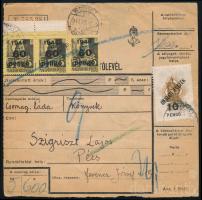
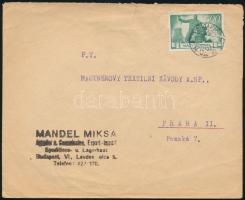
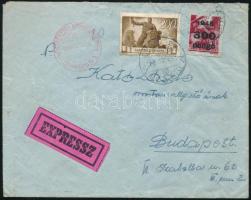
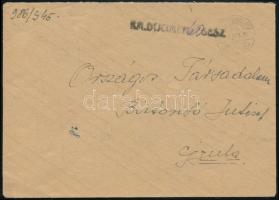
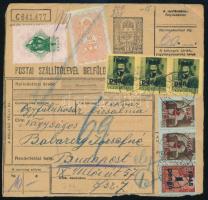
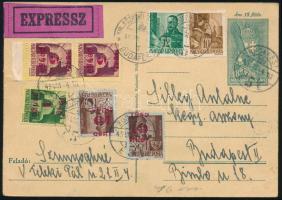
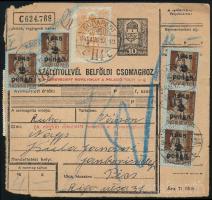
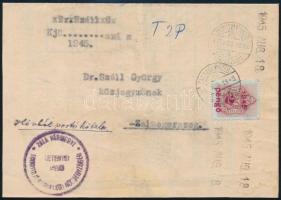
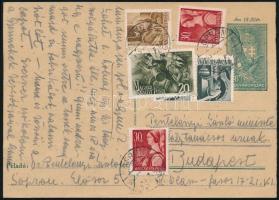
- The stamps were intended primarily for collectors and were only rarely used for postage; genuinely postally used covers are therefore true rarities today.
Forgeries:
- —
Source: Bélyegbarát