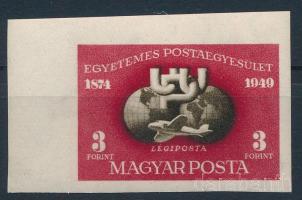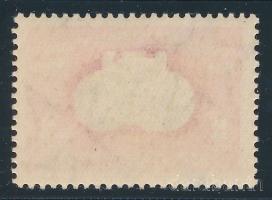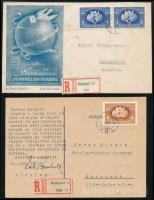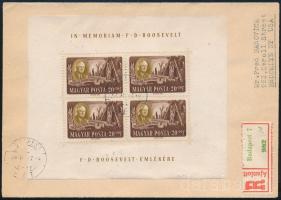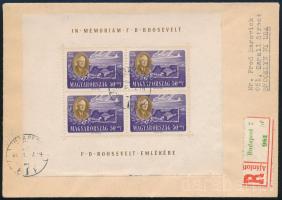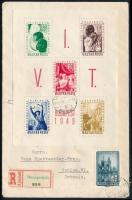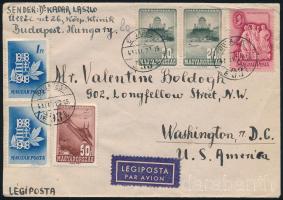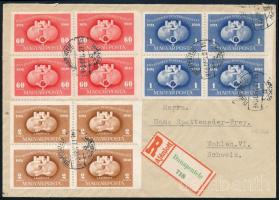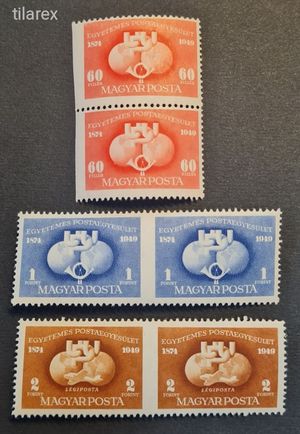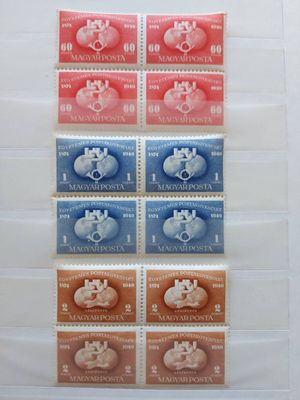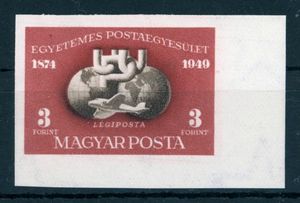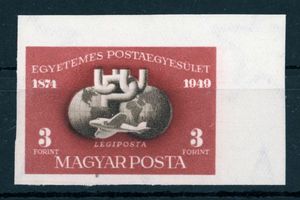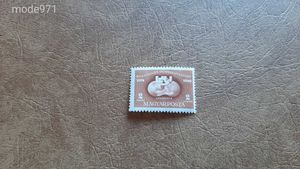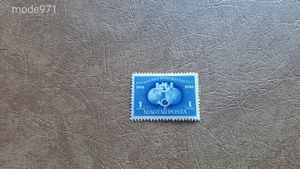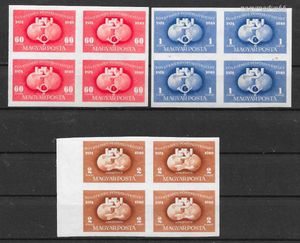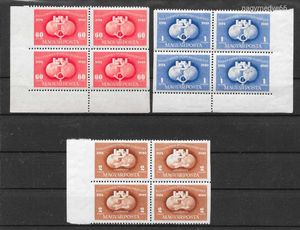
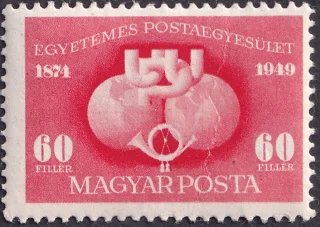
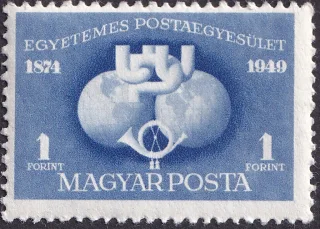
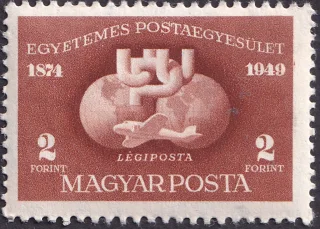
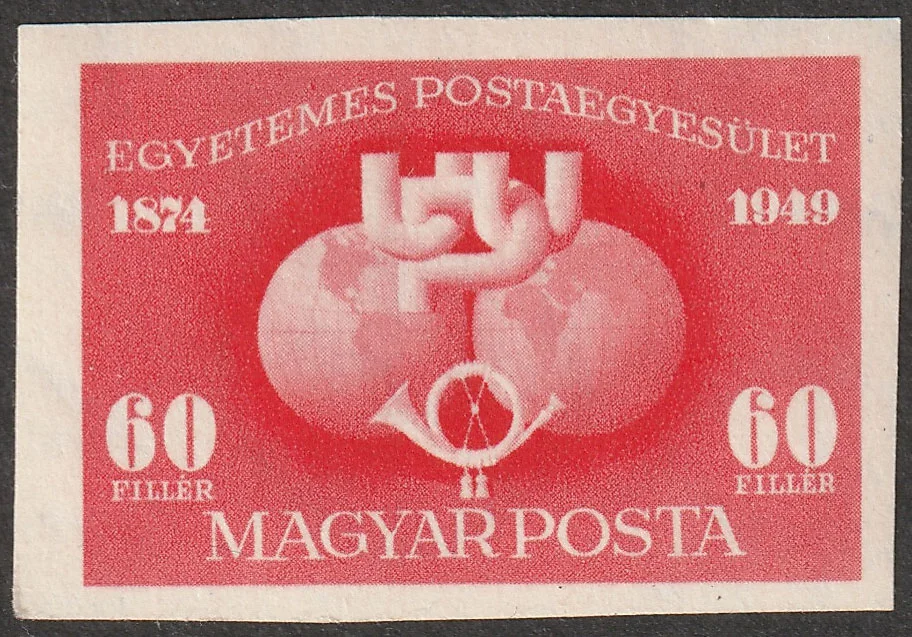
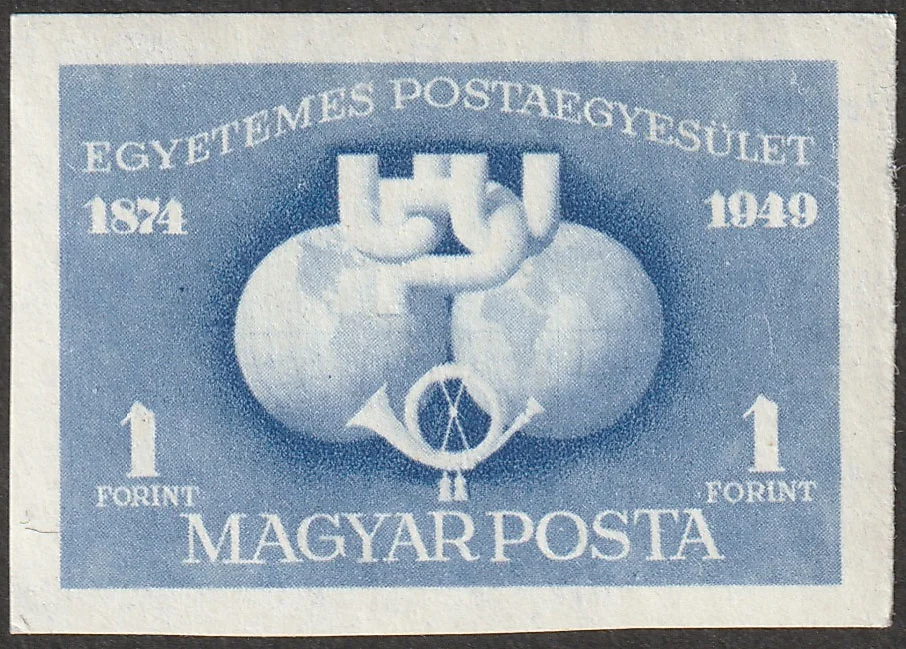
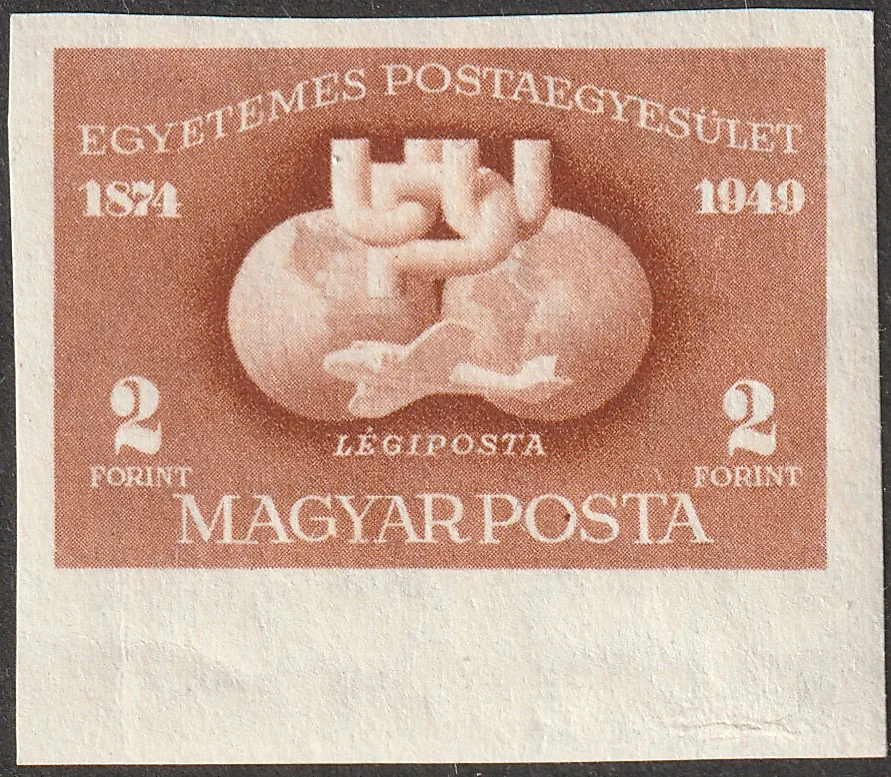
The Universal Postal Union, in French Union Postale Universelle, was founded in 1874 with its permanent headquarters in Bern. Nearly all stamp-issuing countries of the world are members. Its task is to coordinate the postal services of member states on the basis of international postal agreements. The UPU’s 25th anniversary was celebrated only by the Swiss postal administration in its home country. By the 50th anniversary, the postal administrations of Germany and Sweden had joined Switzerland in issuing commemorative stamps. The 75th anniversary, however, was marked by virtually every postal administration with a stamp or a series, much to the delight of thematic collectors. The Hungarian postal administration likewise issued a three-denomination set comprising two ordinary-postage values and one airmail value. A distinctive feature of the issue is its unusual perforation varieties.
The issue was produced in three production varieties and was sold by the postal administration, or supplied to collectors, in four different configurations:
- Variety I: produced in sheets of 100 with 12 : 12½ comb perforation. Stamp size to the perforations: 37 × 26 mm.
- Variety II: produced in sheets of 100, imperforate.
- Variety III: produced in specially perforated sheets of 100. The perforation layout of this specially perforated sheet is shown in the illustration below:
The 12 : 12½ comb perforation of the sheet was produced as follows. The odd-numbered vertical rows of pins were removed from the perforating comb. As a result, the sheet remained imperforate at those positions. In addition, when the sheet was perforated, the first horizontal row of perforations (the first strike) was omitted. Consequently, the lower edge of the first horizontal row received perforations only when the second horizontal row was perforated. Thereafter perforating continued in the usual regular sequence with the “thinned-tooth comb”.
Single stamps
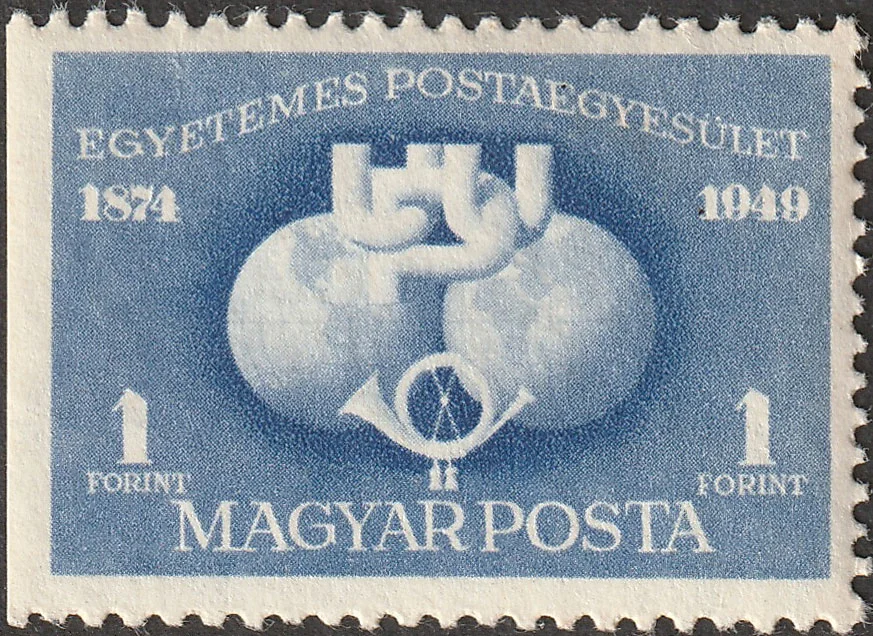
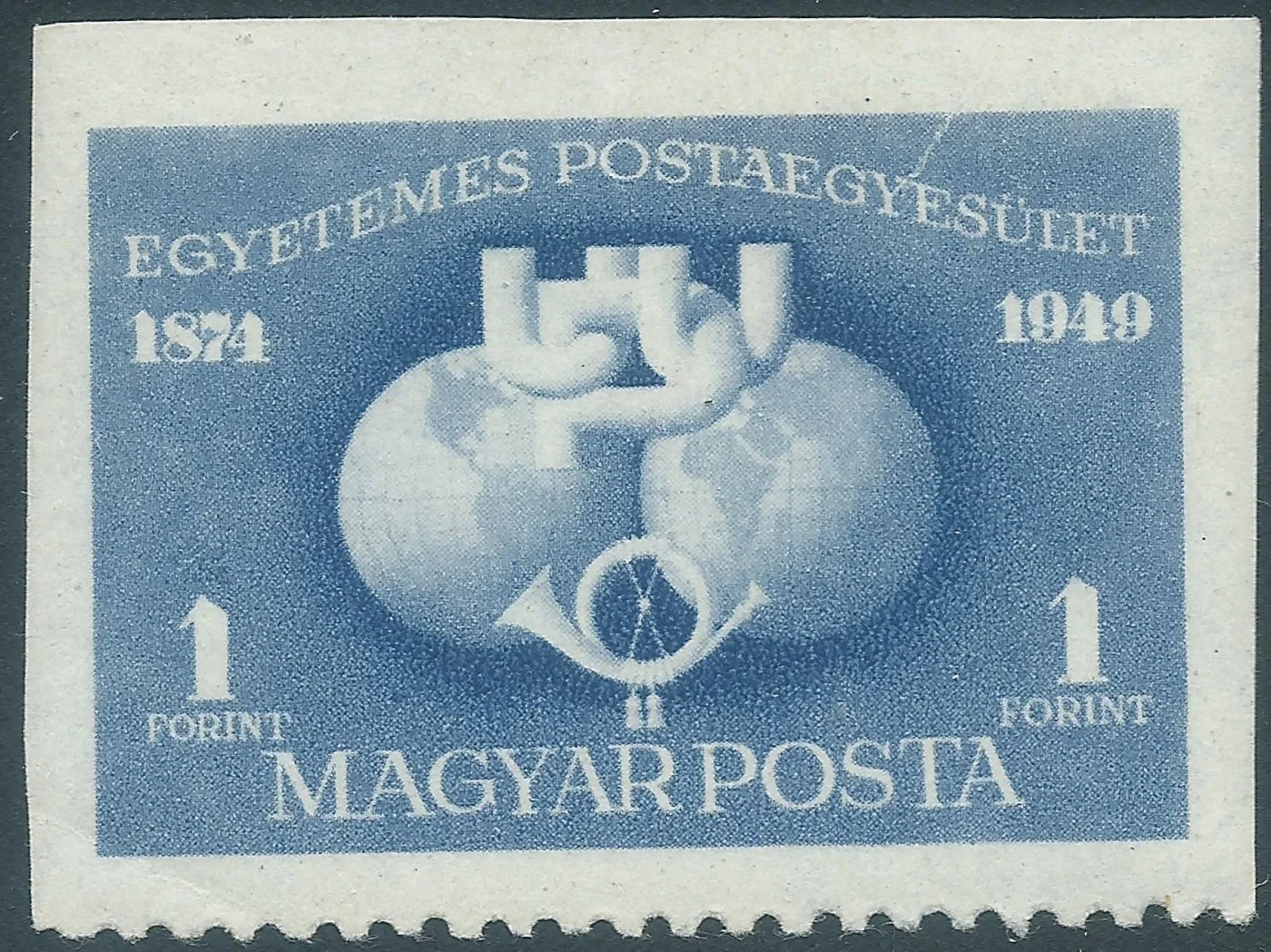
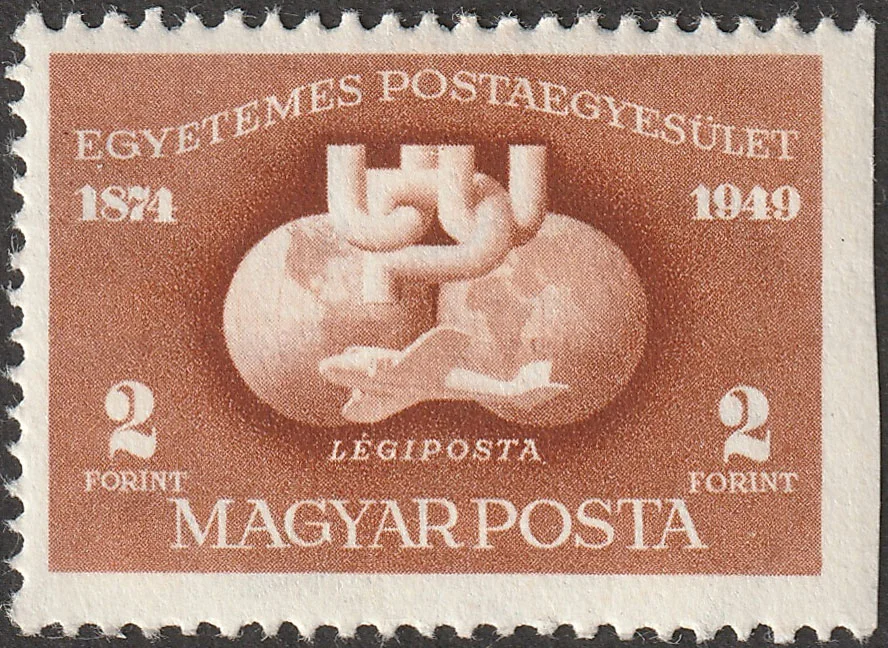
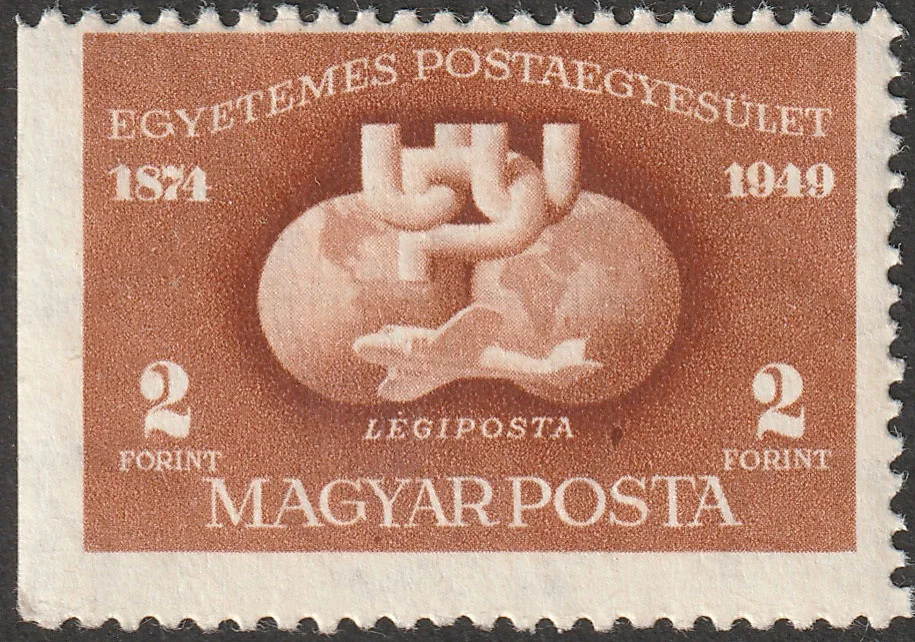
As a result of this special perforating method, the following specially perforated single stamps can be separated from these sheets of 100:
- 10 examples perforated at bottom and imperforate on the other three sides, “D”,
- 45 examples perforated at top, bottom and left, but imperforate at right, “C”,
- 45 examples perforated at top, bottom and right, but imperforate at left, “C”.
The postal administration sold Variety III stamps through its philatelic bureau and later through the National Stamp Sales Company established in 1950 (subsequently the Hungarian Philatelic Company), both as single stamps and as joined pairs.
Joined pairs and blocks
To meet collector demand, joined pairs from the special sheets were also sold in the following combinations:
- Pairs formed from the first and second horizontal rows: the upper stamp is imperforate at left, right and top and perforated at bottom; the lower stamp is perforated at top and bottom and on one side, and imperforate on the opposite side (left or right). Ten such pairs could be obtained from a sheet.
- Pairs formed from the second through tenth horizontal rows (40 pairs): both stamps are perforated at top and bottom and on one side, and imperforate on the opposite side (left or right).
- Five joined pairs can be formed from the first horizontal row, with the bottom side perforated and the other sides imperforate.
- The 45 pairs separated from the second through tenth horizontal rows are perforated at top and bottom and imperforate at left and right. This was the configuration supplied to organised collectors.
- The 36 pairs formed from the second through tenth horizontal rows are perforated at top and bottom and at both outer sides, but imperforate between the stamps. This configuration was released for domestic sale only in later years.
Stamp booklets
To stimulate sales, the Hungarian Philatelic Company also had booklets produced with covers and back covers, each containing six sets, or three horizontal stamp pairs. They were made in two varieties:
- imperforate on two sides,
- imperforate between the stamps and perforated on the remaining sides.
During the period of postal validity, booklet (a) could also be ordered by organised collectors for 21.60 forints plus a handling charge of 1.40 forints, whereas booklet (b) was released for domestic sale only later, after the issue had been withdrawn from postal use.
In addition, varieties of both booklets are known in which the upper stamp pairs are imperforate between the stamps. (UPU special booklet II.)

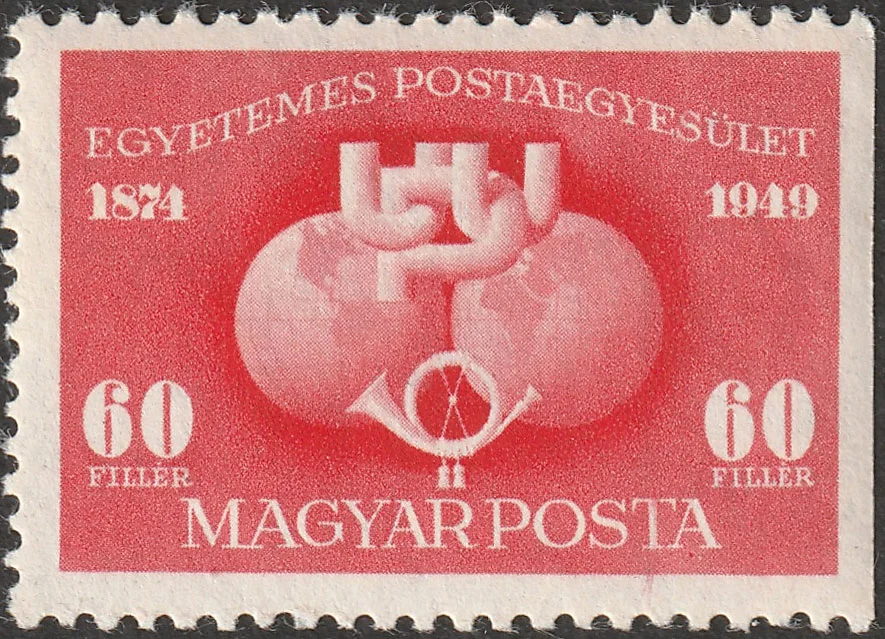 MBK 1112C1
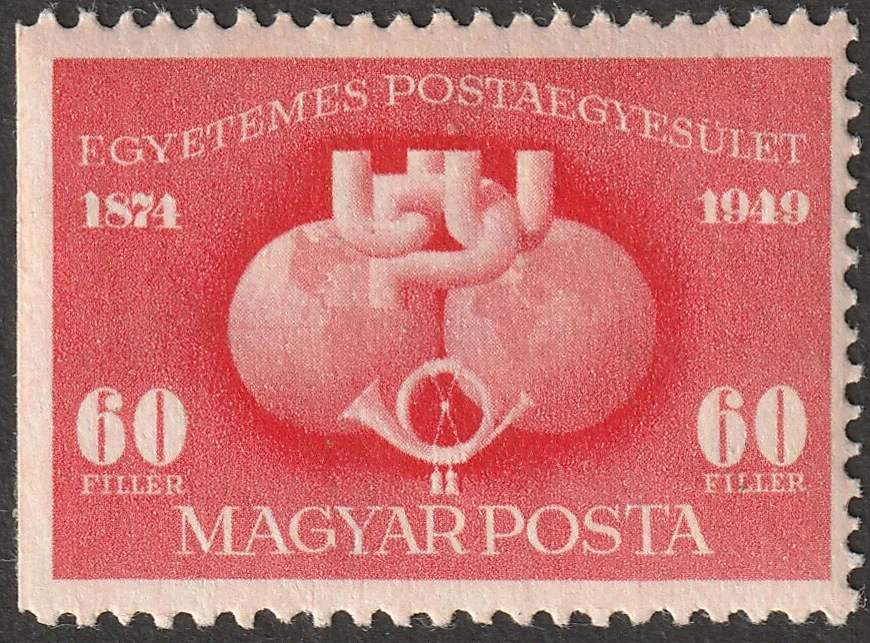 MBK 1112C2
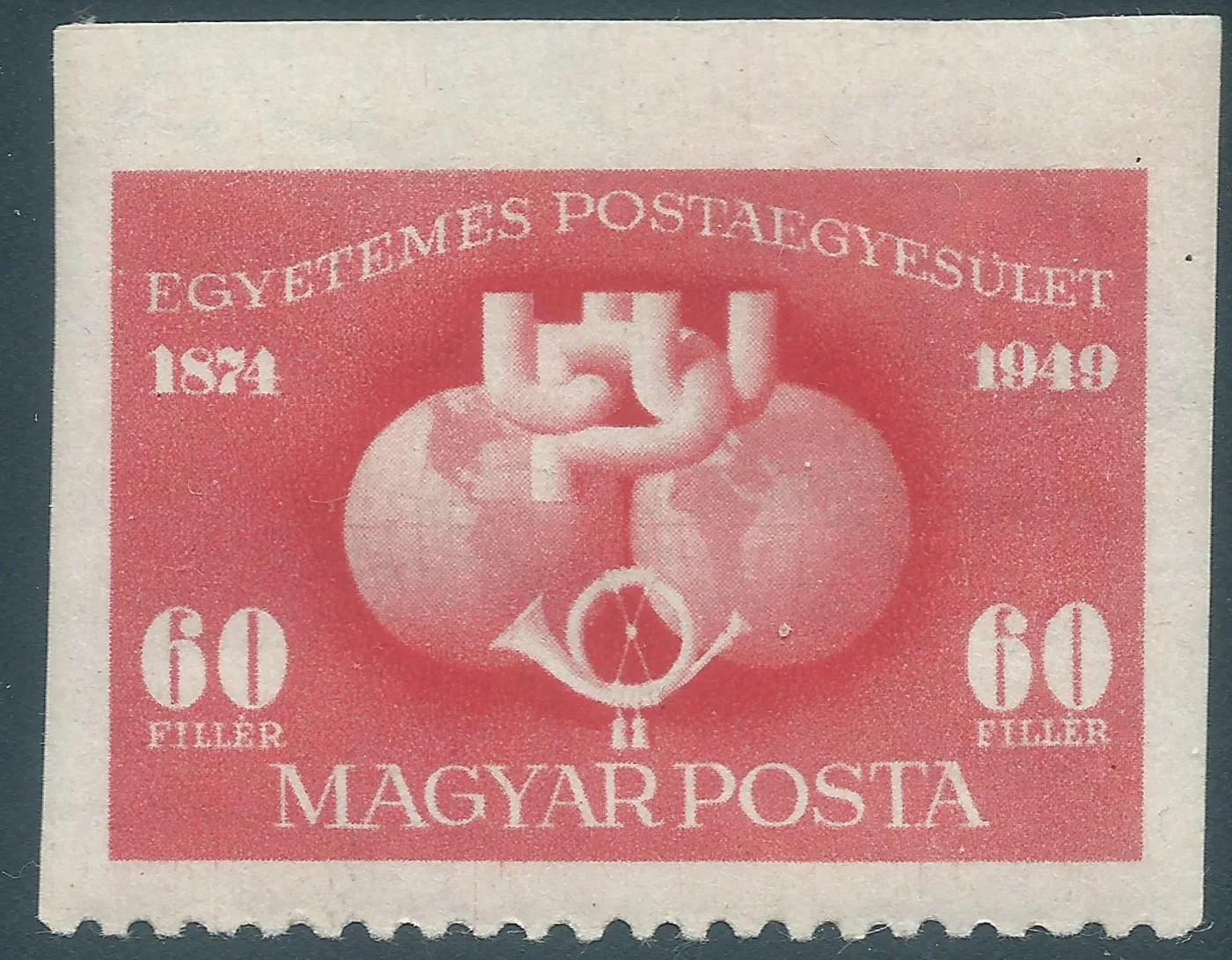 MBK 1112D
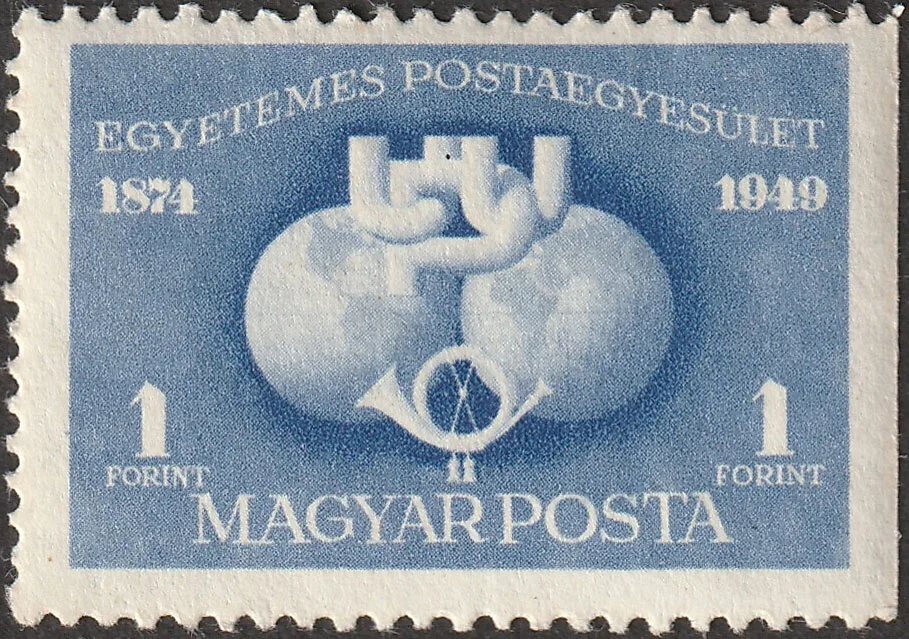 MBK 1113C1
 MBK 1113C2
 MBK 1113D
 MBK 1114C1
 MBK 1114C2
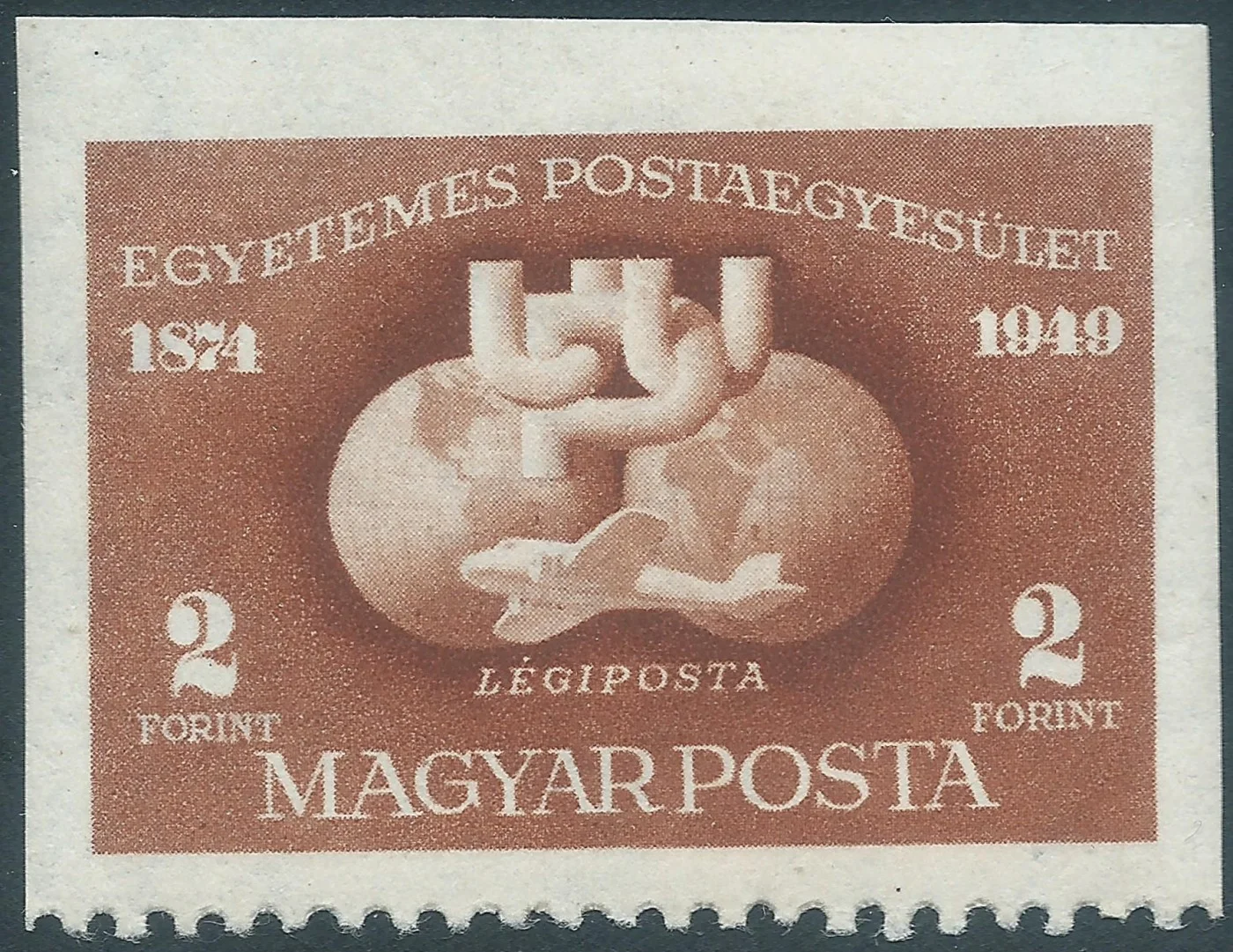 MBK 1114D