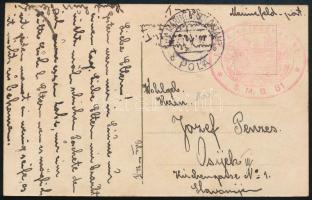
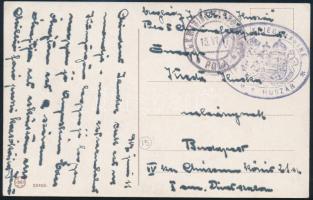
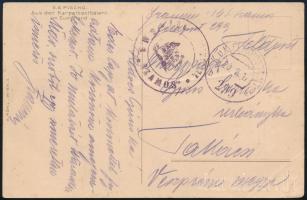
Margaret Island, the peaceful island of couples, walkers and runners, was transformed into a battlefield in the autumn of 1917. Had we visited at the time, we would have seen ruined houses, shell craters, artillery positions and blown-up bridges everywhere. Fortunately, these were only purpose-built structures created for the military exhibition organised by Archduke Joseph, Colonel General. The captured guns lining the road to the Main Pavilion, however, were genuine.Why was this necessary? Because at that time people did not yet watch the horrors of war from an armchair at home. The civilian population could not experience the military events of the First World War directly, since the fronts lay outside the Carpathians. There was one exception: the Romanian incursion into Transylvania that began in the autumn of 1916 after Romania’s declaration of war on 27 August. The Romanian troops were quickly driven out, and later a separate peace with the Central Powers was concluded in Bucharest.
The Margaret Island exhibition also aimed to devote part of its proceeds to alleviating the damage caused in Transylvania. Its other purpose was, of course, to present the war, military equipment and the destruction they caused.
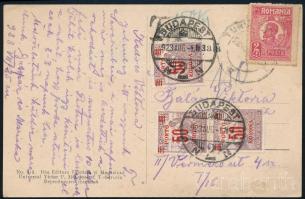
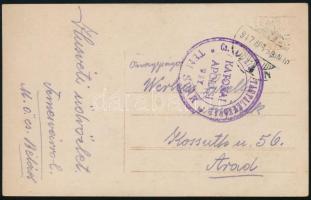
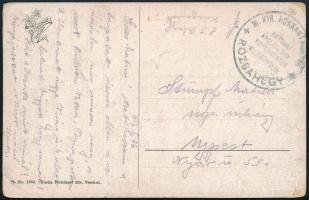
The Post also prepared for the exhibition with a surcharged commemorative stamp issue and the establishment of a temporary post office. Overprinted examples of the Reaper pair with white numerals were issued in quantities of 500,000 of each value, much to the delight of collectors. The 1 korona surcharge on each stamp—which represented an 800% premium—was regarded at the time as a world record and likewise served charitable purposes.
The scale of interest is well illustrated by the fact that 28,000 sets were sold on the very first day!
Given the strong interest and the high quantity issued, I find it somewhat surprising that no errors are known from this issue. Comparable overprinted stamps almost always produced inverted overprints.
Why was this necessary? Because at that time people did not yet watch the horrors of war from an armchair at home. The civilian population could not experience the military events of the First World War directly, since the fronts lay outside the Carpathians. There was one exception: the Romanian incursion into Transylvania that began in the autumn of 1916 after Romania’s declaration of war on 27 August. The Romanian troops were quickly driven out, and later a separate peace with the Central Powers was concluded in Bucharest.
The Margaret Island exhibition also aimed to devote part of its proceeds to alleviating the damage caused in Transylvania. Its other purpose was, of course, to present the war, military equipment and the destruction they caused.
The Post also prepared for the exhibition with a surcharged commemorative stamp issue and the establishment of a temporary post office. Overprinted examples of the Reaper pair with white numerals were issued in quantities of 500,000 of each value, much to the delight of collectors. The 1 korona surcharge on each stamp—which represented an 800% premium—was regarded at the time as a world record and likewise served charitable purposes.
The scale of interest is well illustrated by the fact that 28,000 sets were sold on the very first day!
Given the strong interest and the high quantity issued, I find it somewhat surprising that no errors are known from this issue. Comparable overprinted stamps almost always produced inverted overprints.