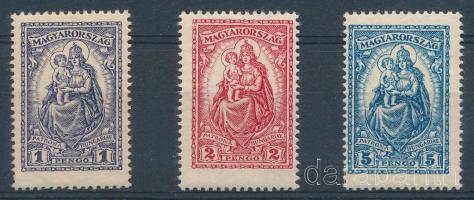
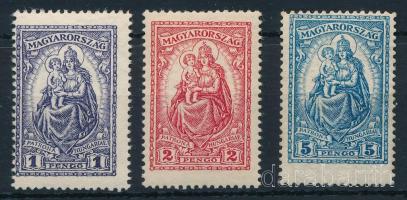
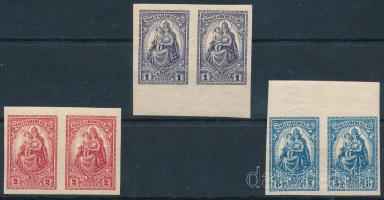
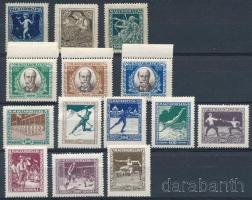
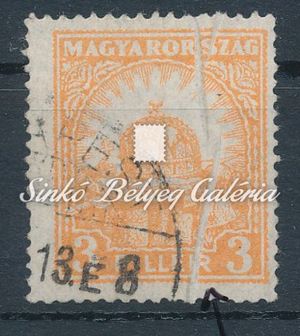
1926–1933 Pengő–Fillér
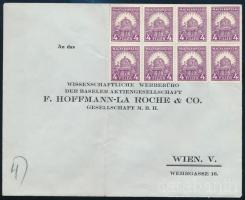
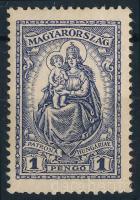
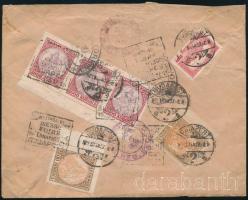
As a result of the economic crisis and inflation following the First World War, the korona–fillér currency system was replaced by the pengő–fillér in 1926. The first stamps denominated in pengő and fillér entered circulation in the first half of 1926. The original designs were created by Ferenc Helbing. For later printings and issues, the designs were also reworked by Antal Medgyesi Schwartz, Ernő Koch and Vilmos Brandmayer.
A total of 16 denominations appeared between 1926 and 1933. Identification is complicated by different perforations, watermarks, paper thicknesses, shades and design types. The 1–25 fillér values were issued with two different perforations. With the exception of the 25 and 70 fillér values, every denomination appeared on paper with two different watermarks. Some values were printed on both thin and thick paper.
At first glance, the designs of the first issue on Watermark VIII paper and the later issue on Watermark XI paper appear identical, but closer examination reveals several readily identifiable differences. The two issues were produced using different printing processes.
On the 1–8 fillér values, the principal differences concern the form of the denomination numerals. The designs of the 10–20 fillér stamps remained essentially unchanged from Ferenc Helbing’s originals. More substantial alterations were made to the 32–50 fillér values.
The most important differences include:
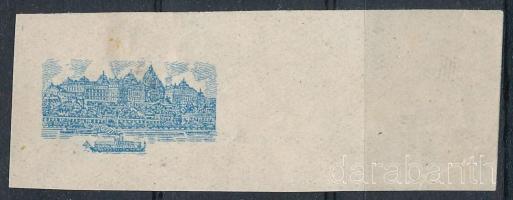
the treatment of the area between the Danube and Buda Castle;
the rendering of the Danube and the depiction of the water level;
the presence or absence of ships on the river;
the form of the tree-of-life motifs on either side of the stamp design.
Design varieties can already be found within the first 1926 issue. On the 32 and 40 fillér values a ship is visible in the foreground, whereas this detail is absent from other denominations with a similar design.
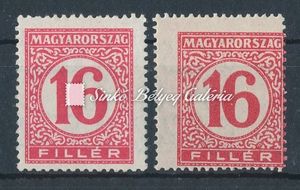
Several denominations appeared in different colours in the two issues. The 16 fillér value is known in two distinct shades within each issue.
Several hundred million stamps of this series were printed. The enormous quantities resulted in numerous plate flaws, shades and other production varieties.
The issue is also associated with one of the most important postal forgeries of the period, produced to defraud the Post. A four-man group forged the commonly used 8, 16, 32 and 40 fillér values. The forgeries entered normal postal circulation because one member of the group operated a busy tobacconist’s shop in Budapest.
Among its customers for postage stamps was the Pesti Magyar Kereskedelmi Bank. Consequently, a significant proportion of surviving forgeries are known with the P.M.K.B. perfin.
Characteristics of the forgeries:
printed by lithography;
printed on unwatermarked paper;
perforation finer than on the genuine stamps, approximately 15½.
Philatelic catalogues list and value these postal forgeries separately. In some cases their market value exceeds that of genuine stamps.
To facilitate identification, the Green Book presents the two issues side by side in supplementary illustrations, highlighting the principal differences in perforation, paper thickness, watermark, colour and design.